When Arizona homeowners set out to build a patio, pool deck, or driveway that can shrug off triple-digit summers, the conversation almost always lands in the same place: travertine and brick pavers. Both materials have earned their reputation across Phoenix and the wider Valley for good reason, they look elegant, they hold up to relentless desert sun, and they stay far more comfortable underfoot than the alternatives.
We install a lot of hardscape every year, and we’ve watched these two materials outperform poured concrete and bargain products time and again. Here’s why they remain the go-to choice for elegant outdoor spaces, and how to decide which one belongs in your yard.
Why travertine and brick pavers thrive in the desert
Arizona is a brutal testing ground for any outdoor surface. Ground temperatures on a July afternoon can climb well past 150°F, monsoon storms dump inches of rain in an hour, and soil that shifts with heat and moisture cracks materials that aren’t built to move. Travertine and brick pavers handle all of it.
Unlike a single slab of poured concrete, pavers are individual units set over a flexible, compacted base. That structure changes everything:
- They flex instead of cracking. When the ground shifts, the sanded joints absorb the movement rather than splitting a solid slab.
- Repairs are simple. If a single paver is ever stained or damaged, we lift it and swap it out, no jackhammering an entire patio.
- Drainage is built in. Water filters through the joints instead of pooling, which matters when monsoon season arrives.
Travertine: the cool-underfoot favorite for pool decks
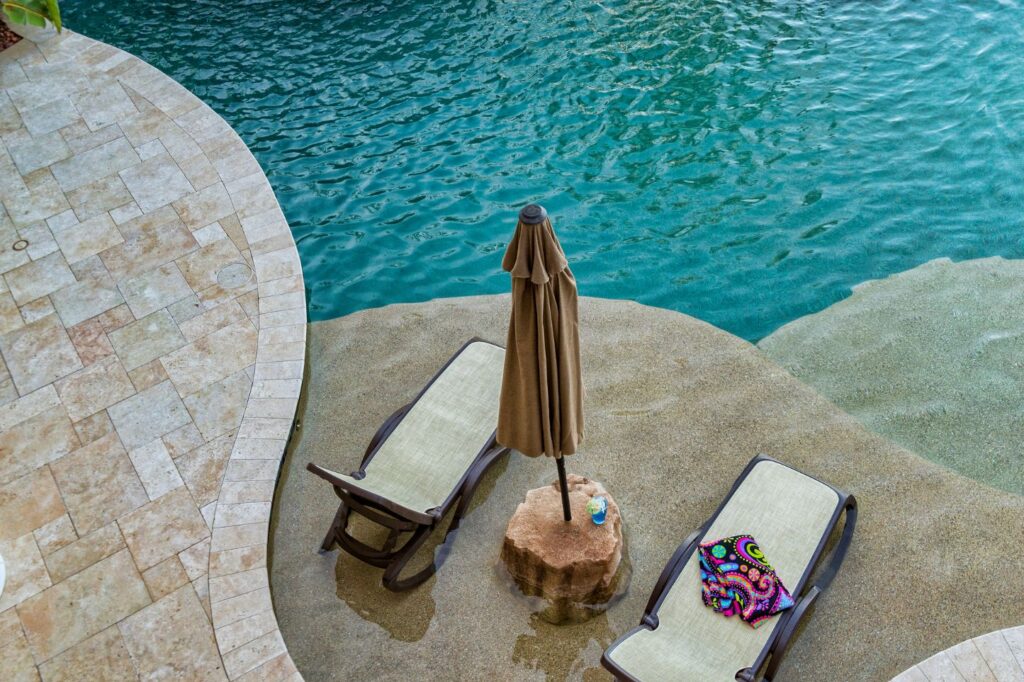
If there’s one material Arizona homeowners fall in love with, it’s travertine. This natural stone has a porous structure that simply doesn’t absorb and radiate heat the way concrete or dark pavers do. On a scorching afternoon, that means a pool deck you can actually cross barefoot.
Why travertine works so well here
- Stays cooler in the sun. Its light, earthy tones reflect heat rather than soaking it up, a huge advantage around pools and patios.
- Naturally slip-resistant. The tumbled, textured finish gives grip even when wet, which is exactly what you want on a splashed pool deck.
- Timeless desert color. Ivory, walnut, and gold tones echo Arizona’s natural landscape and pair beautifully with stucco and desert plantings.
Travertine’s porousness is also its one caveat: it should be sealed so it resists staining and etching from pool chemicals and hard water. Done right, it stays gorgeous for decades. It’s our top recommendation for pool surrounds and shaded patios where comfort underfoot is the priority.
Brick pavers: classic character that lasts
Brick brings a warm, traditional charm that never really goes out of style. Genuine clay brick pavers are fired at high temperatures, which gives them color that runs all the way through, so even after years of Arizona UV, they don’t fade or wash out the way surface-dyed products can.
Where brick shines
- Driveways and walkways. Brick is dense and tough, standing up to vehicle weight and constant foot traffic.
- Rich, lasting color. Deep reds, browns, and charcoals hold their tone through relentless sun.
- Classic patterns. Herringbone, basketweave, and running-bond layouts add instant character to an entry or courtyard.
Brick tends to run warmer than travertine in direct sun, so we often steer homeowners toward it for driveways, front walks, and courtyards rather than barefoot pool decks, or we blend the two, using travertine underfoot and brick as a striking border.
Design ideas that make the most of pavers
The real magic happens when travertine and brick pavers become part of a larger outdoor-living plan. In Phoenix, the backyard is a true living space for much of the year, and pavers are the foundation of it. A few combinations we love:
- A travertine pool deck bordered with a brick soldier course for definition.
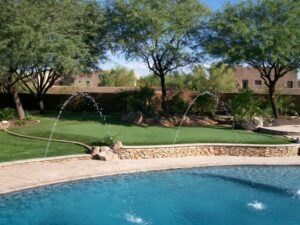
- An extended paver patio built around a fire or water feature for year-round evenings outside.
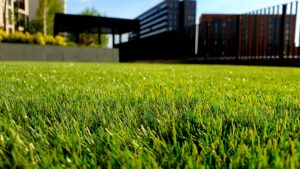
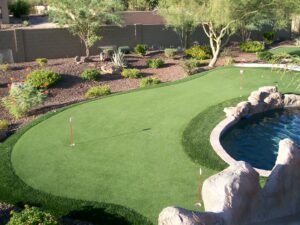
- Paver walkways flowing into a low-water artificial turf lawn for a lush-but-efficient yard.
- Paver borders framing beds of decorative rock and gravel for a clean, finished desert look.
Browse our project gallery to see how these elements come together across real Valley homes.
Why professional installation matters
Here’s the honest truth: with pavers, the base is everything. A beautiful surface set over a poorly prepared foundation will settle, shift, and turn uneven within a season or two, especially once monsoon rains and expansive desert soil get to work.
Quality hardscape and paver installation means excavating to the right depth, compacting an aggregate base built for our climate, setting a proper bedding layer, and locking everything in with polymeric joint sand and secure edge restraints. As a family-owned Arizona company (ROC #293110), that’s the standard we build to on every project, so your patio still looks level and elegant 15 years from now.
Questions homeowners ask
Are travertine and brick pavers too hot for Arizona pool decks?
Travertine is one of the coolest-underfoot options available, its porous, light-toned surface reflects heat rather than storing it, making it ideal for pool decks. Brick runs a bit warmer, so we typically recommend it for driveways, walkways, and courtyards, or as a border accent around cooler travertine.
Do travertine and brick pavers require much maintenance?
Very little. Travertine should be sealed periodically to resist staining, and both benefit from occasional rinsing and re-sanding of the joints over the years. Unlike concrete, individual pavers can be replaced if one is ever damaged, no need to redo the whole surface.
Which lasts longer in the desert, pavers or poured concrete?
Pavers, in most cases. Because they flex with ground movement and drain through their joints, they resist the cracking that plagues poured concrete slabs in our shifting soil and monsoon rains, and they’re far easier to repair if damage ever occurs.
Ready to design an elegant, heat-smart outdoor space? Request a free estimate for an honest, itemized quote, or call our Phoenix team at (602) 878-6755. As a local, family-owned company, we’ll help you choose the right pavers for your yard and install them to last.