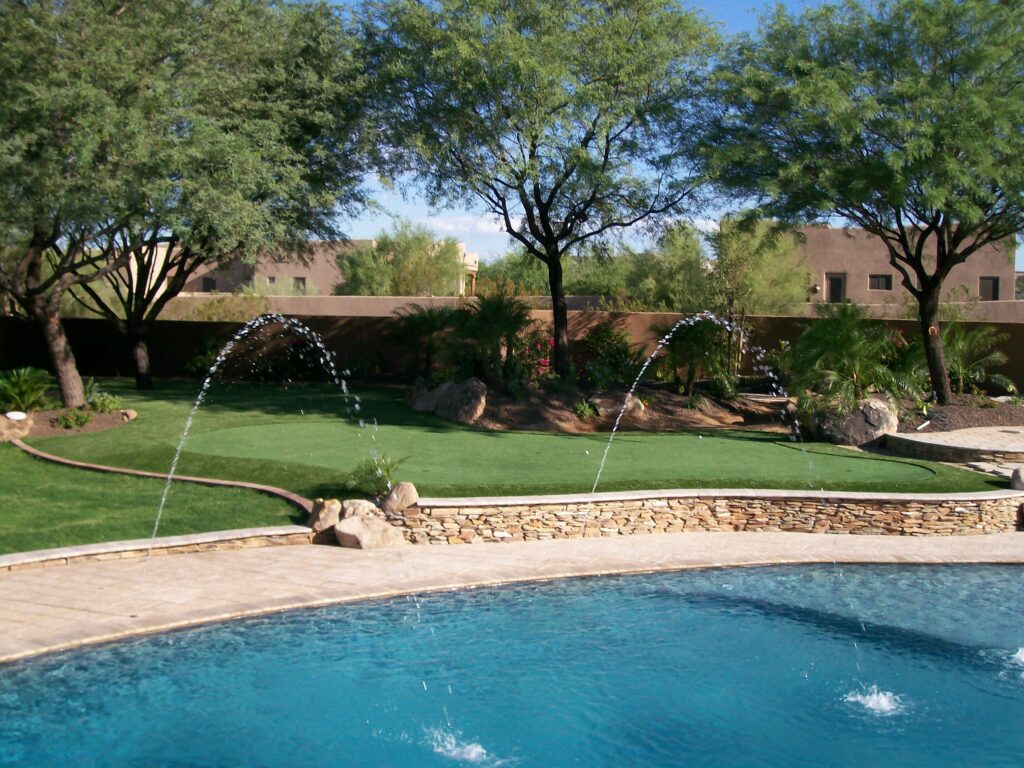
Monsoon season is one of the few times Arizona yards get a real soaking, and while artificial turf handles storms far better than natural grass, the wind, dust, and heavy rain do leave a little cleanup behind. The good news: getting your turf looking fresh again after monsoon season takes almost no time. Here is a simple, Arizona-specific post-monsoon care routine to reset your lawn for the beautiful fall months ahead.
Why monsoon matters for turf
Quality artificial turf is built to drain, so it does not flood or turn to mud the way a natural lawn does. What monsoon storms actually leave behind is surface debris, blown-in leaves, dust, seed pods, and the occasional small branch, plus a bit of flattened pile in high-wind areas. A quick reset clears all of it and keeps your artificial turf looking and draining like new.
Step 1: Clear the debris
Start by removing the loose material that storms deposit on the surface:
- Pick up any branches, large leaves, and monsoon litter by hand.
- Use a leaf blower on a low-to-moderate setting, or a plastic-tined rake, to move lighter debris off the turf. Avoid metal rakes, which can snag the blades.
- Pay attention to corners and edges where wind tends to pile things up.
Clearing debris first matters because it keeps organic material from breaking down into the infill, which is what leads to odor and drainage issues down the road.
Step 2: Rinse away the dust
Monsoon winds coat everything in a fine layer of desert dust. A simple rinse with a garden hose washes it off the blades and settles the infill back into place. For most yards, a good rinse every few weeks, and especially after a big dust storm, keeps the color bright and the surface fresh. You do not need chemicals or special equipment; plain water does the job.
Step 3: Brush the high-traffic areas
Wind and foot traffic can flatten the pile in spots. Use a stiff, synthetic-bristle push broom and brush against the grain to lift the blades back upright. Focus on walkways, play areas, and anywhere people or pets travel the same path. This one step is what keeps turf looking full and natural instead of matted, and it takes just a few minutes.
Step 4: Check your drainage
After heavy rain is the perfect time to confirm water is moving the way it should. Look for any spots where water pooled and did not drain within a few minutes, and make sure surrounding drains, scuppers, and low points are clear of debris. Properly installed turf drains freely, so standing water usually points to a blocked drain nearby rather than the turf itself, an easy fix once you spot it.
Step 5: Tidy the borders
Storms can wash out or shift rock and gravel borders and expose turf edges. Rake decorative rock back into place, re-seat any lifted edging, and clean the seams where turf meets pavers or hardscape. Crisp borders make the whole yard look cared-for and keep edges secure through the next round of weather.
A quick post-monsoon checklist
- Remove branches and heavy debris by hand.
- Blow or rake off lighter litter.
- Rinse the turf to clear dust and settle infill.
- Brush high-traffic areas against the grain.
- Confirm drains and low points are clear.
- Refresh rock borders and re-seat edges.
Run through this once at the tail end of monsoon season and your lawn is set for fall. Compared to the weekly mowing, watering, and reseeding a natural lawn demands, it is a remarkably light lift for a yard that looks great every day.
How turf outperforms a natural lawn in storm season
It is worth appreciating what you are not dealing with. A natural Bermuda or ryegrass lawn takes monsoon season hard: heavy rain compacts the soil and pools in low spots, foot traffic on wet ground tears up the grass, and the humidity that follows invites fungus and weeds. You end up with mud tracked indoors, ruts where people walked, and bare patches to reseed. Artificial turf sidesteps all of it, water drains straight through, the surface stays firm and clean, and there is nothing for weeds or fungus to take hold in. Your post-storm cleanup is cosmetic, not structural, and that is the whole difference.
Top up the infill if needed
Over years of use and weather, infill levels can gradually drop. If your turf feels harder underfoot than it used to, or the blades lie flat even after a good brushing, a top-up of fresh infill restores the cushion and helps the pile stand tall again. It is an easy, inexpensive refresh that extends both the life and the look of the lawn, and monsoon’s end is a natural time to check it.
When to bring in a pro
Most post-monsoon care is a simple DIY routine, but it is worth a professional look if you notice water consistently pooling and not draining within a few minutes, seams lifting at the edges, or infill thin enough to leave the backing visible in high-traffic lanes. Those point to the base or infill needing attention, quick fixes when caught early, bigger headaches if ignored. If your turf was installed by someone who cut corners on the base, monsoon season is usually when it shows.
Frequently asked questions
Does monsoon rain damage artificial turf?
No. Quality turf is designed to drain and handle heavy rain without flooding or mud. Storms mainly leave surface debris and dust, which rinse and brush away easily.
How often should I rinse my turf in Arizona?
A rinse every few weeks keeps dust down, with an extra rinse after major dust storms. In pet areas, rinse more often to keep things fresh.
What tools should I avoid on artificial grass?
Skip metal rakes and anything with sharp tines that can catch the blades. A synthetic-bristle broom, plastic rake, or leaf blower is all you need.
Want a lawn that shrugs off monsoon season and looks great year-round? Request a free estimate and we will show you what low-maintenance really looks like in Arizona.