One of the biggest reasons Phoenix homeowners switch to artificial grass is the promise of a beautiful lawn without the endless mowing, watering, and fertilizing. That promise is real, but “low maintenance” doesn’t mean “no maintenance.” A little routine care keeps your turf looking lush, draining well, and lasting for years. In this quick guide, we’ll share the artificial turf maintenance habits we recommend to every Arizona customer.
The good news: it takes just minutes, not weekends, and most of it you can do with tools you already own.
Why upkeep still matters
Synthetic turf is engineered to shrug off the desert sun and heavy foot traffic, but dust, pet waste, spills, and windblown debris still accumulate. Regular upkeep protects your investment by preventing matting, keeping drainage clear, and stopping odors before they start. In Arizona specifically, upkeep revolves around three realities: fine dust, intense heat, and sudden monsoon downpours.
Routine care made simple
Rinse regularly to fight dust
Our valley air carries a lot of fine dust, and it settles into turf fibers over time. A quick rinse with a garden hose every week or two washes it away and revives the color. In dusty neighborhoods or after a haboob, rinse a little more often. If you’re on Phoenix-area municipal water, you’ll notice it’s hard, high in calcium and minerals, so let the turf dry evenly rather than in patchy puddles, which is where whitish deposits tend to form. A morning or evening rinse also avoids evaporating on contact during the hottest part of a summer afternoon.
Brush the fibers to prevent matting
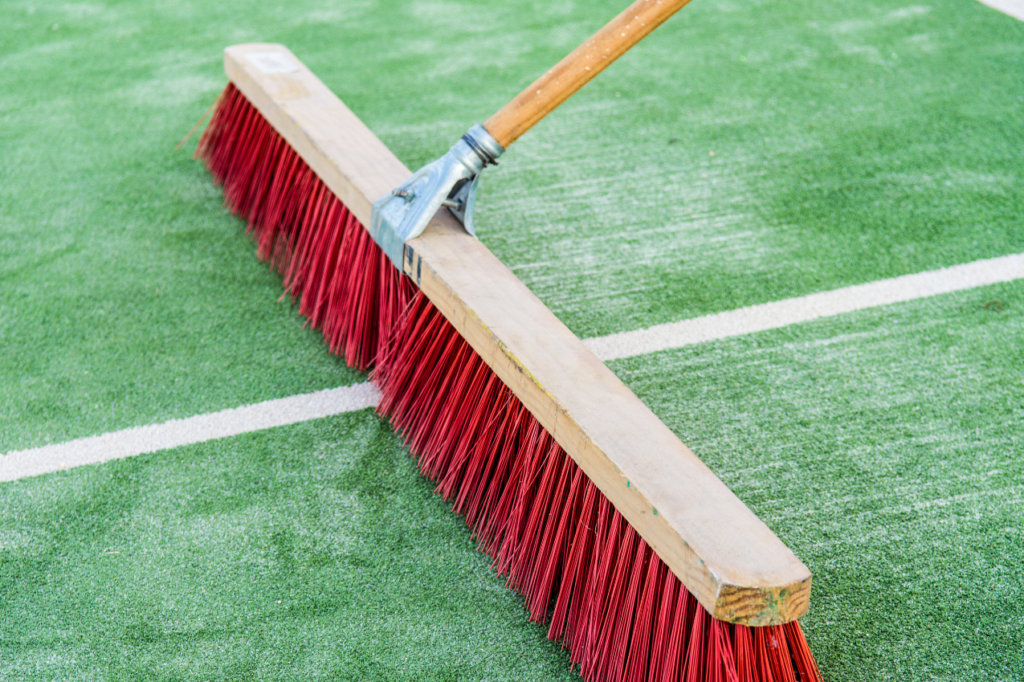
High-traffic areas, pathways, gate zones, kids’ play spots, can flatten over time. Use a stiff, synthetic-bristle broom or a power broom to fluff the blades back upright. Always brush against the grain for the best lift. Avoid metal rakes, which can damage the fibers.
Clear leaves and debris
Leaves, palm litter, and organic debris left sitting can break down and encourage weeds or moss in the infill. A leaf blower or plastic rake keeps the surface clean without harming the turf.
Pet-area care
If you have dogs, your pet turf area needs a little extra attention to stay fresh:
- Pick up solid waste promptly, just as you would on any lawn
- Rinse potty zones weekly, more often in summer heat
- Apply an enzyme-based turf deodorizer monthly to neutralize odor
- Keep the drainage area free of buildup so liquids flow through
Because pet-grade turf drains through a permeable backing, odor is rarely an issue when you stay on top of these simple steps. In the dog days of a Valley summer, when surface temperatures climb and dogs use the yard more in the cooler early hours, we suggest bumping potty-zone rinsing to two or three times a week, heat accelerates the ammonia smell that enzyme cleaners are designed to break down.
Handling Arizona heat and monsoons
Two seasonal factors shape artificial turf maintenance here more than anywhere else.
Summer heat
Turf can get warm in direct afternoon sun. A quick hose-down cools the surface almost instantly and drains away in minutes, making the lawn comfortable again for kids and pets. Shade from trees, sails, or a patio also keeps temperatures down. Rest assured that quality turf won’t fade or melt under normal Arizona sun, it’s UV-stabilized for our climate.
Monsoon season
Heavy summer storms are actually a bonus: a good downpour rinses your turf for free. Properly installed turf over a compacted, free-draining base sheds water quickly with no puddling. After a big storm, just check that drainage areas and edges are clear of washed-in debris.
Desert debris: pollen, tree litter, and hard-water spots
Beyond dust and monsoons, Arizona yards deal with a few seasonal messes that catch new turf owners off guard. Planning your artificial turf maintenance around them keeps the surface looking its best year-round:
- Spring pollen and blossoms. Palo verde trees blanket everything in yellow flowers from April into May, and olive, mesquite, and mulberry add their own drop. A light rinse or blow keeps this fine debris from working down into the infill.
- Fall and winter leaf drop. Ash, sissoo, and fruitless mulberry shed heavily in cooler months. Clearing leaves before they mat down prevents the damp underside where weed seeds like to settle.
- Overseed clippings. If neighbors overseed with winter rye, clippings and seed blow onto turf. A quick blow keeps stray grass from sprouting at the edges.
- Hard-water mineral spots. Sprinkler overspray or a pool splash-out can leave white calcium marks. A 50/50 white vinegar and water spray, a gentle brush, and a rinse clears them.
None of this takes long, a few minutes with a blower and hose after the season’s big shed is usually all it takes to stay ahead of it.
Stains, spills, and weeds
Turf fibers are non-porous, so most spills sit on top rather than soaking in, and plain water handles the majority of them. Blot up a liquid, rinse the spot, and you are usually done. For anything greasy, like sunscreen or barbecue drippings, a few drops of mild dish soap in warm water cut it, then rinse until the water runs clear.
Pet messes are about odor more than color. Rinse the area well, and for a smell that lingers use a turf-safe enzyme cleaner at the dilution on the label, which breaks down the source instead of masking it. Gum, wax, and other sticky messes come off easiest after you harden them with a bag of ice, then lift the piece away.
Hard-water marks from sprinkler overspray are the one place white vinegar earns its keep. Dilute it, apply it to the spot itself, and rinse it off right away. Do not spray vinegar across the whole lawn. Acetic acid degrades the backing and seam adhesive over time and strips the coating off odor-control infill, the part you paid extra for in a pet area.
Skip bleach, harsh solvents, wire brushes, and pressure washers. They discolor fibers or blow out infill, and that damage does not come back. Stray weeds at the edges pull out by hand, and a permeable weed barrier under the turf keeps them rare to begin with.
Deep clean, step by step
A few times a year, or whenever the surface starts to look dull, set aside an afternoon for a deeper clean. Here is the routine we use.
- Clear the surface. Blow or rake off every leaf and loose bit of debris so you are working on bare turf.
- Cross-brush the fibers. Work a stiff synthetic brush against the grain across the whole lawn to stand the blades up and free embedded grit. Never use a metal rake.
- Rinse in sections. Hose the turf a section at a time so the water carries loosened dirt down through the drainage backing.
- Apply a turf-safe enzyme cleaner. Mix it with water in a garden sprayer at the label dilution and coat the surface. For a greasy patch, a little mild dish soap in warm water does the same job. Keep vinegar for hard-water spots, not the whole lawn.
- Let it dwell, then agitate. Give the cleaner a few minutes to work and pass a soft brush over any stubborn spots.
- Rinse again and let it dry. Flush until the water runs clear, then let the Arizona sun finish the job.
One tool to leave in the shed is a pressure washer. The same force that lifts dirt displaces infill and frays fibers, and you will not notice until the lawn feels hard underfoot and looks matted. A garden hose with a spray nozzle is all our climate asks for.
A simple seasonal checklist
- Weekly: pick up debris and pet waste, spot-rinse as needed
- Monthly: full rinse, brush high-traffic areas, deodorize pet zones
- Seasonally: check seams and edges, clear drainage, refresh infill in worn spots
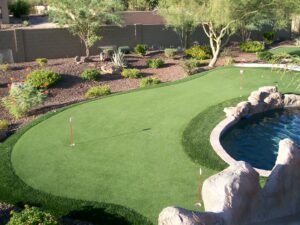
Follow this and your turf will look showroom-fresh for a decade or more. The same easy care applies whether you have a full artificial turf lawn, a backyard putting green, or a play area for the kids.
Quick answers
How often should I clean artificial turf?
For most Arizona yards, a light rinse every one to two weeks and a thorough cleaning monthly is plenty. Pet areas and dusty locations benefit from more frequent rinsing, especially during summer and after dust storms.
Does artificial turf need infill replaced?
Infill can shift or compact in high-traffic zones over time. Occasionally topping up and brushing infill back into place keeps the blades upright and the surface performing well. Most homeowners only need this every few years.
Can I pressure wash my turf?
You can, but use a low-pressure setting and hold the nozzle at a distance so you don’t displace infill or damage fibers. For routine artificial turf maintenance, a standard garden hose is usually all you need.
Want turf that stays effortless year after year? Request your free estimate or call our team at (602) 878-6755, we’ll help you keep your Arizona lawn looking its best.