Artificial turf is built to take a beating, kids, dogs, patio furniture, and relentless Arizona sun, but it is not indestructible. Every so often a homeowner calls us with a burn mark, a lifted seam, or a flattened path worn across the yard, worried they are looking at a full replacement. The reassuring news is that in most cases you can absolutely repair artificial turf rather than tear it all out. Here is how we think about turf damage, what is fixable, and when repair is genuinely the smarter call.
Can you really repair artificial turf?
Yes, the vast majority of turf problems we see are localized, which means they can be corrected without disturbing the rest of the lawn. Turf is installed in sections with seams, infill, and a compacted base, and each of those elements can be serviced independently. Knowing whether to fix, re-stretch, patch, or replace a section is really about identifying what failed and why.
- Cosmetic issues like matting and low infill are the easiest to correct.
- Physical damage like burns, tears, and pet digging usually calls for a patch.
- Installation issues like lifting seams and rippling need re-securing or re-stretching.
- Base problems like sinking or pooling water require fixing the ground underneath.
Common turf damage and how we repair it
Burns and melt marks
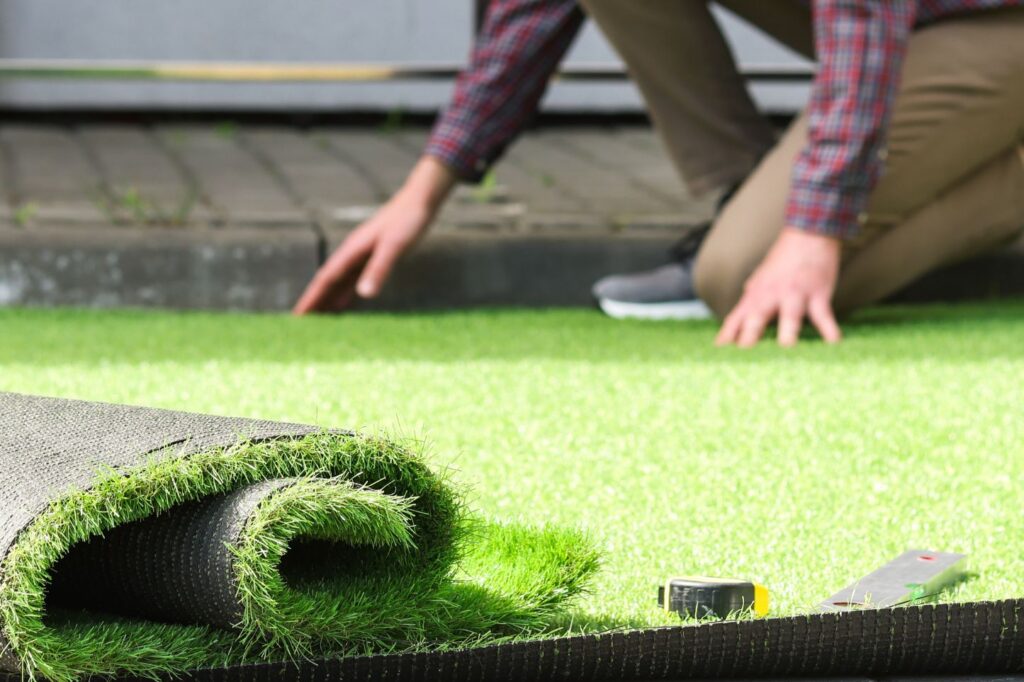
This is the most frequent damage we repair on artificial turf in Arizona. A stray cigarette, a fallen grill ember, or, surprisingly often, sunlight magnified off a low-E window or a mirror can melt a patch of blades. Melted fibers cannot be revived, so the fix is to cut out the damaged section and seam in a fresh piece. This is exactly why we always recommend keeping your leftover turf scraps after installation; a matching patch is nearly invisible.
Tears, seams, and lifting edges
Seams that separate or edges that lift are usually the result of adhesive breaking down, stakes working loose, or heavy foot traffic. These are very repairable, we clean out the old bond, re-glue or re-nail, and re-set the infill so the seam disappears again. Caught early, a lifting edge is a quick fix; ignored, it becomes a trip hazard and lets weeds and water get underneath. Our monsoon storms are especially hard on loose edges, a single microburst can catch a lifted corner like a sail and peel it back, so we treat even a small lift as worth addressing before July and August arrive.
Flattened, matted areas
Worn paths and pressed-down spots under furniture are often not “damage” at all, the fibers are simply lying down. Cross-brushing against the grain and topping up the infill stands them back up, and a full lawn can look years younger after a proper grooming. This is the least invasive repair there is.
Pet damage and drainage issues
Dogs are hard on turf, and dig spots or odor buildup are common in high-traffic pet and dog run areas. We patch torn sections, refresh odor-control infill, and correct drainage so the area rinses clean. If water is pooling or a section has sunk, the real problem is the base beneath the turf, we lift that piece, re-grade and re-compact, then re-lay it.
How Arizona’s climate causes turf damage, and how we prevent it
Repairs go easier when you understand why turf fails here in the first place, because our damage patterns are not the same ones you would see in a milder climate. Three desert forces do most of the work. The first is reflected and magnified heat: a west-facing window, a stainless grill, or a glass patio table can concentrate sunlight into a beam hot enough to melt blades in minutes, the same phenomenon that scorches car dashboards. The second is monsoon runoff: those short, violent summer storms dump an inch of rain in an hour, and if the base was not graded to drain, that water scours channels and undermines seams. The third is ground movement in our expansive desert soils, which swell when wet and shrink bone-dry, gradually opening low spots and ripples.
Knowing this shapes how we repair artificial turf so the same spot does not fail twice. When we patch a heat melt, we talk through what reflected it and whether a shade sail or a repositioned grill solves it for good. When we re-lay a sunken section, we do not just drop the turf back down, we rebuild the aggregate base with proper compaction and slope so the next storm drains instead of pools. A repair that ignores the desert cause is just a countdown to the next call; a repair that accounts for it tends to outlast the surrounding lawn.
When repair beats replacement
Repair is almost always the first thing worth exploring. It saves money, avoids the labor of a full tear-out, and keeps your yard usable. We generally recommend repairing when:
- The damage is limited to one or a few spots.
- The surrounding turf is still in good shape and not heavily faded.
- You have matching leftover turf or the product is still available.
- The base is sound apart from an isolated low spot.
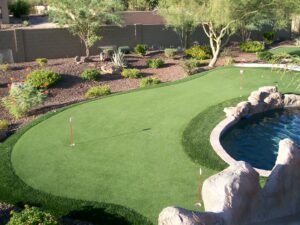
Full replacement makes more sense when turf is old, broadly UV-faded so patches would not match, or when the base has failed across a large area. Even then, high-use features like backyard putting greens or a main artificial turf lawn can often be selectively refreshed rather than fully redone.
How to protect your turf from damage
A little prevention goes a long way in the desert. Keep grills and fire pits off the turf, watch for reflected sunlight from windows and mirrors, use furniture glides, cross-brush high-traffic lanes now and then, and save those installation scraps. Small habits like these are the difference between a lawn that needs occasional touch-ups and one that needs a major repair.
What customers usually ask
Can you repair artificial turf burns?
Yes. Melted or burned blades cannot be restored, but the damaged section is cut out and a matching patch is seamed in. With leftover turf from your original install, the repair blends in so well most people never notice it was there.
How much does it cost to repair artificial turf?
It depends on the type and size of the damage, but a localized patch, seam re-glue, or grooming is far cheaper than replacement. We assess the area in person and give a straightforward estimate before any work begins, no surprises.
Should I repair or replace my damaged turf?
If the damage is isolated and the surrounding turf is still in good condition, repair is almost always the better value. Replacement only makes sense when turf is old, widely faded, or the base has failed across a large section.
Have a burn, tear, or worn spot you would like us to look at? Contact us for a free repair estimate or call our Arizona team at (602) 878-6755, and we will help you get your lawn looking its best again.