Artificial turf is one of the smartest upgrades an Arizona homeowner can make. It saves water, stays green through 115° summers, and frees you from endless yard work. But like anything, it lasts longest when you treat it right. Over the years we’ve seen a handful of artificial turf mistakes pop up again and again — small habits that can shorten the life of an otherwise flawless lawn. Here’s what not to do, so your turf stays beautiful for a decade or more in our tough desert climate.
Common artificial turf mistakes with heat and fire
Arizona heat is intense, and while quality turf is built to handle direct sun, it does have a few natural enemies.
- Don’t place a grill or fire pit directly on turf. Synthetic fibers can melt from direct flame or falling embers. Always set grills and fire features on a paver pad or stone base.
- Watch for reflected sunlight. Low-E windows and mirrors can concentrate sunlight into a beam hot enough to scorch fibers. If you notice a bright reflection hitting your lawn, a screen or shade can redirect it.
- Never toss cigarette butts or hot coals on turf. They’ll leave burn marks that can’t be reversed.
Protecting turf near patios and outdoor kitchens
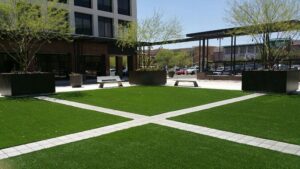
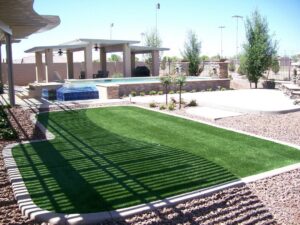
Many of our Phoenix clients love blending turf with a hardscape entertaining area. The trick is keeping heat sources on hard surfaces. Pairing turf with hardscape and pavers gives you a safe, stylish spot for grills, fire pits, and seating without risking the lawn.
Cleaning and maintenance mistakes to avoid
Turf is low maintenance, but a few well-meaning habits can actually cause damage.
- Don’t use harsh chemicals. Bleach, ammonia, and acidic cleaners can discolor fibers and break down the backing. Mild soap, vinegar, or turf-safe enzyme cleaners are all you need.
- Don’t use metal rakes or wire brushes. They snag and tear blades. Use a stiff synthetic-bristle broom instead.
- Don’t blast it with a high-pressure washer. Strong streams displace infill and fray the fibers. A garden hose is safer.
- Don’t ignore spills and pet waste. Letting messes bake in the heat makes them harder to remove and can cause odors.
Weight, traffic, and everyday wear
Turf is durable, but concentrated weight and friction are where problems start.
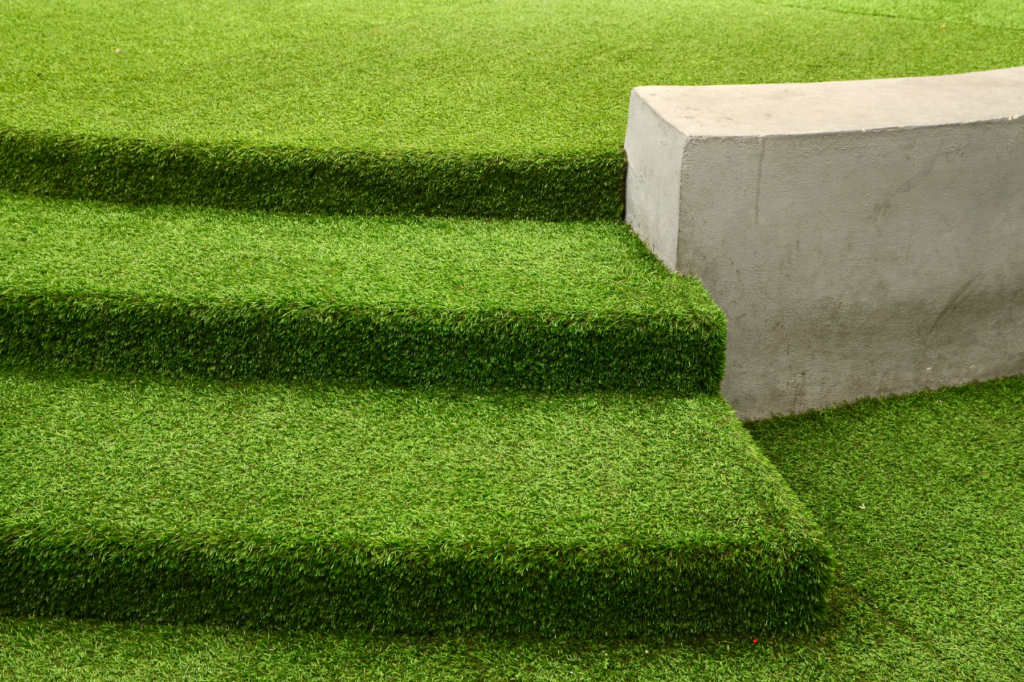
- Avoid parking vehicles on turf. The weight crushes the fibers and compacts the base, leaving permanent flat spots.
- Move heavy furniture around occasionally. Leaving a heavy planter or bench in one place for months can flatten the blades beneath it.
- Keep sharp or heavy dragging objects off the surface. Dragging patio furniture can pull at seams and fibers.
High-traffic areas and play zones
If you have kids or pets, some wear is normal — and totally fine. The mistake is installing standard landscape turf in a spot that needs a heavier-duty product. Play areas and pet zones do best with specialized turf, which is why we use purpose-built systems for schools and playgrounds and pet runs.
Landscaping choices that quietly damage turf
Some of the most common artificial turf mistakes we’re called out to fix have nothing to do with the turf itself — they come from what’s planted or placed around it. In an Arizona yard, a few neighbors matter more than most:
- Overspray from drip and spray irrigation. Turf never needs watering, so aim nearby emitters at the plants, not the lawn. Constant overspray of the Valley’s hard water leaves stubborn white mineral rings on the fibers.
- Messy trees planted too close. Olives, mulberries, and fruiting citrus drop staining litter, while palo verde and mesquite shed fine blossoms and pods that work into the infill. A little planning on placement saves a lot of blowing and rinsing later.
- Granite and rock migrating onto the lawn. Loose decomposed granite from an adjacent xeriscape bed gets kicked onto turf, where it’s abrasive underfoot and hard to remove. A clean paver or bender-board edge keeps the two surfaces separate.
- Reflective pool water and light-colored walls. Just like Low-E windows, a bright pool surface or freshly painted white wall can bounce concentrated light onto one spot. Watch for any lawn area that seems to run hotter than the rest.
None of these are dealbreakers — they’re just easy to design around when you know they’re coming.
Installation mistakes that cause the most regret
By far the biggest artificial turf mistakes happen before the turf is ever walked on. A beautiful product installed poorly won’t last.
- Skipping proper base prep. Without a compacted, well-graded aggregate base, turf develops ripples, dips, and drainage problems — a serious issue during monsoon season.
- Cutting corners on drainage. Arizona’s heavy monsoon rains need somewhere to go. Poor drainage leads to pooling and odor.
- Using too little infill. Infill keeps blades upright and stabilizes the surface. Too little and the turf looks flat and matted quickly.
- Choosing the cheapest turf. Low-grade products with weak UV protection fade and break down fast in our sun.
This is exactly why professional installation pays off. Done right the first time, turf can last 15 years or more — you can see the difference in our project gallery.
Frequently asked questions
Can artificial turf melt in the Arizona sun?
Not from sunlight alone — quality turf is UV-stabilized for our climate. However, it can melt from direct flame, hot coals, or concentrated reflected light from Low-E windows. Keep grills and fire pits on a hard surface and address any intense window reflections.
Is it bad to leave heavy objects on artificial turf?
Leaving heavy furniture or planters in one spot for long periods can flatten the fibers underneath. The blades usually bounce back if you move items periodically and brush the area. Parking vehicles on turf, however, can cause permanent damage.
What cleaning products should I never use on turf?
Avoid bleach, ammonia, acidic drain cleaners, and petroleum-based solvents, all of which can discolor fibers or degrade the backing. Stick with mild dish soap, diluted white vinegar, or enzyme cleaners made specifically for artificial grass.
Want turf installed the right way and built to last in Arizona’s heat? Request your free estimate or call our family-owned team at (602) 884-8760 — we’ll help you avoid the mistakes and enjoy a worry-free lawn.