Concrete patios, tired pool decks, and bare slab side yards are everywhere in the Valley, and most of them sit unused because they bake in the sun for months at a time. Turning that hard, hot surface into soft, usable green space is one of the most popular projects we take on. The good news for Phoenix homeowners is that installing artificial grass on concrete is absolutely doable, when it is planned and prepped the right way. Below we walk through the factors we consider on every slab before a single roll of turf goes down.
Why homeowners choose artificial grass on concrete
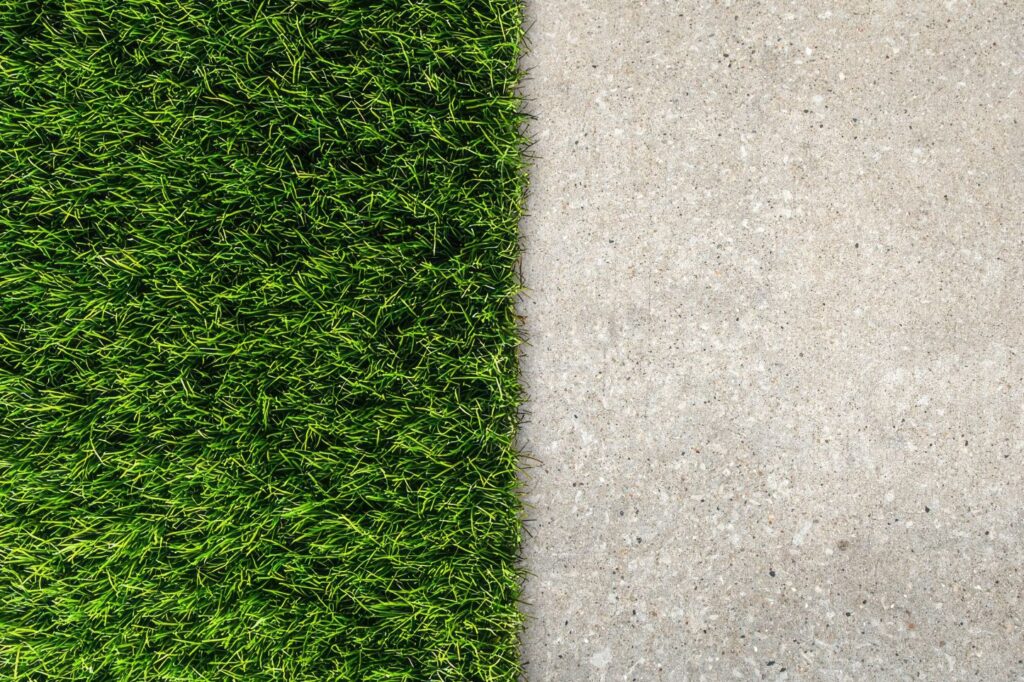
A slab has a few things going for it as a base. It is already flat, already compacted, and it will not shift or sink the way loose soil sometimes does. For families in Chandler, Mesa, Gilbert, and central Phoenix, covering concrete with turf means a cooler, safer surface for kids and pets, a patio that finally gets used, and a backyard that looks finished year-round without mowing or overseeding.
- Comfort: Bare concrete radiates heat and is hard on knees, paws, and bare feet.
- Curb appeal: A gray slab reads as unfinished; turf reads as a designed space.
- Function: Old pool decks and narrow side yards become play areas, putting spots, or pet runs.
- Low upkeep: No weeds pushing through cracks, no water bill spikes.
The most important factors to consider
Drainage comes first with artificial grass on concrete
This is the single biggest thing people underestimate. Soil drains straight down; concrete does not. When we install artificial grass on concrete, we have to give monsoon water somewhere to go. Every quality turf we use has perforated drainage holes in the backing, but the slab underneath decides where that water travels. We check the existing slope, most patios are already pitched slightly away from the house, and we make sure that pitch is protected, not blocked. Where a slab is dead flat or pitches the wrong way, we add a drainage layer or core-drill weep holes so water cannot pool under the turf during a summer storm.
Padding, heat, and a comfortable feel
Turf laid directly on hard concrete feels thin and firm. To fix that, we typically add a shock-absorbing foam underlayment. In Arizona this pad does double duty: it softens the surface for falls and it creates a small air gap that helps the turf feel cooler underfoot. We also steer homeowners toward lighter turf colors and heat-reflective infills for full-sun slabs, since darker fibers on a west-facing patio can climb well above air temperature on a July afternoon. If a cooler surface is a priority for you, that is a conversation worth having up front.
Surface prep on the existing slab
Adhesion only works on a clean, sound surface. Before install we address:
- Cracks and spalling: Wide cracks and crumbling edges get patched and leveled so they do not telegraph through the turf.
- Old coatings and paint: Flaking sealer or deck paint is removed so adhesive can bond.
- Low spots: Birdbath depressions that hold water are floated flat.
- Cleanliness: The slab is power-washed and fully dried before anything is glued.
How the turf is secured
You cannot drive landscape stakes into concrete, so the attachment method changes. On slabs we bond seams and perimeters with an outdoor turf adhesive rated for Arizona heat, and where the turf meets soil or a planter we transition to standard nails. Getting seams tight and glued correctly is what separates a professional job from a peeling DIY project two summers later.
Where concrete turf projects work best
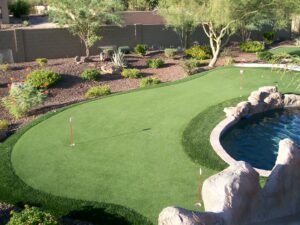
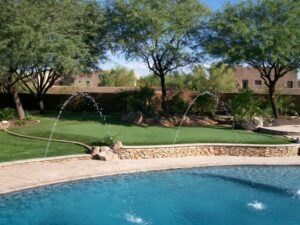
We install over concrete for all kinds of spaces. Covered patios and shaded slabs are the easiest wins. Sun-blasted pool decks work well with the right pad and infill. Narrow side yards, often just a strip of concrete between two houses, become tidy pet and dog runs that rinse clean. Some homeowners combine turf with hardscape and pavers to break up a large slab into zones for dining and play. If you want a fuller lawn feel across the whole yard, our artificial turf installations can blend concrete areas cleanly into surrounding turf and borders.
When concrete may need extra attention
A few situations call for a closer look before we quote. Slabs with major structural cracking or heaving may need repair first. Areas that already flood in a hard rain need a real drainage plan, not just perforated turf. And enclosed patios with zero pitch and no nearby drain sometimes need core-drilled weep holes. None of these are dealbreakers, they simply mean the prep matters even more, which is exactly why we walk every slab in person.
Good to know
Does water drain through artificial grass on concrete?
Yes. The turf backing is perforated so water passes through, but it still needs an exit path. On flat or poorly pitched slabs we add a drainage layer or drill weep holes so monsoon water flows away instead of pooling underneath the turf.
Will turf on concrete get too hot in Arizona summers?
Any surface in full Phoenix sun warms up, but a foam underlayment plus a heat-reflective infill and lighter fibers keep concrete turf noticeably more comfortable than bare slab. A quick rinse also cools it fast on the hottest days.
How long does artificial grass on concrete last?
With proper prep and quality materials, expect a 15-year product warranty and, with proper care, well over a decade of use. The concrete base is stable and will not shift, so as long as seams are bonded well and drainage is handled, these installs tend to hold up beautifully.
Ready to turn a hot, unused slab into cool, green living space? Take a look at our recent projects in the gallery, then contact us for a free estimate or call our team directly at (602) 878-6755. We would love to show you what your concrete could become.