When homeowners ask us what goes under artificial turf, they’re really asking the most important question in the whole project. The blades you see are only the top of a carefully engineered system. Here in the Phoenix valley, what lies beneath the surface decides whether your lawn stays flat, drains during monsoon storms, and survives 115° summer afternoons for the years to come. We’ve installed turf across the desert long enough to know that a beautiful lawn is built from the ground up, literally.
The layers beneath every artificial turf
A quality turf installation is a stack of purpose-built layers. Skip one, or cut a corner, and you’ll see it later as ripples, low spots, or standing water. Understanding what goes under artificial turf helps you spot the difference between a lasting install and a quick job that fails in a season or two.
Step one: excavation and sub-grade prep
Everything starts with removing the old surface. We strip out natural grass, weeds, roots, and roughly three to four inches of native soil. Arizona’s expansive clay soils swell and shrink with moisture, so we grade the exposed sub-grade to establish proper slope, usually a gentle pitch away from your home and toward drainage points. This is also when we handle any low areas that would otherwise trap water later.
Step two: weed barrier and pest protection
Once the sub-grade is shaped, we lay a commercial-grade weed barrier fabric. In the desert, aggressive Bermuda and nutsedge will push through anything less. For homes near open desert, this layer also discourages burrowing pests and gophers from tunneling up into your new lawn.
The base: the most important part of the job
If there’s one thing that separates a professional install from a weekend project, it’s the aggregate base. This is the compacted mineral layer that gives your turf its strength, drainage, and that firm, natural feel underfoot.
Class II road base and decomposed granite
We build the foundation with three to four inches of crushed aggregate, typically a Class II road base or a mix topped with decomposed granite (DG). Here’s why the blend matters in Arizona:
- Drainage: The angular stone creates air voids that let monsoon rain pass straight through instead of pooling on the surface.
- Stability: A properly compacted base won’t shift under foot traffic, patio furniture, or a dog sprinting across the yard.
- Heat management: A firm mineral base resists the softening and rutting that plagues turf laid over loose desert dirt.
We compact each lift with a plate compactor, wetting the material as we go to hit the right density. The finished base should be smooth, hard as a sidewalk, and pitched for runoff. On our artificial turf and putting greens, this compaction step is where the true-rolling, wrinkle-free surface is won or lost.
Shock pads, when they belong under turf
Not every lawn needs a shock pad, but some absolutely do. A foam shock-absorbing layer sits between the base and the turf to add cushioning and increase fall-height safety ratings. We recommend them for schools and playgrounds, sports fields, and family yards where kids will be tumbling around.
The turf and what locks it down
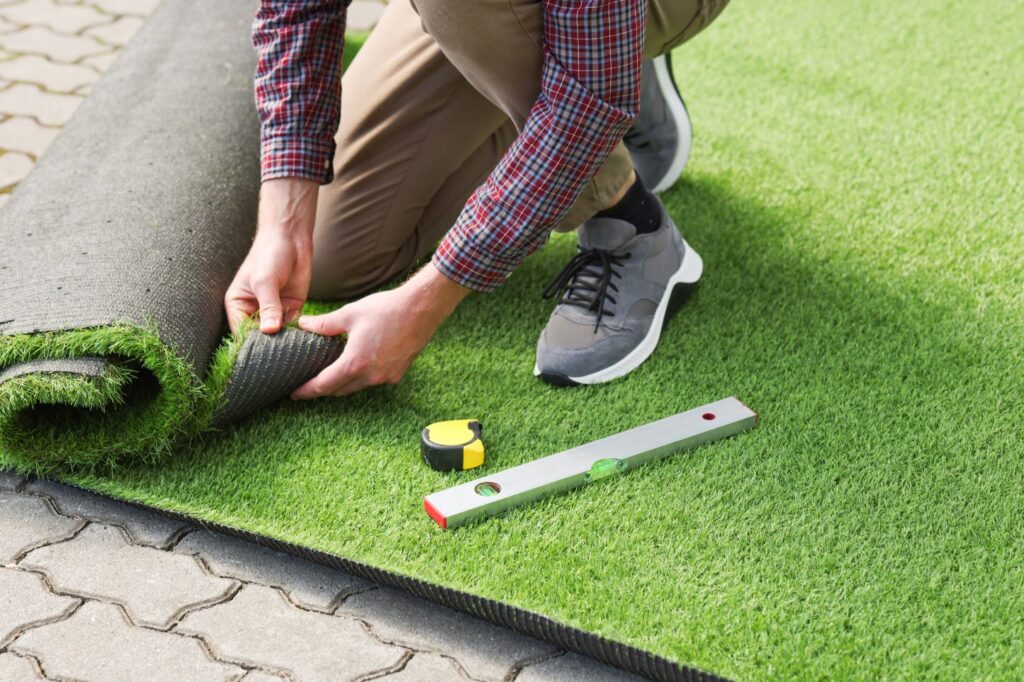
With the base dialed in, we roll out the turf itself, letting it acclimate in the Arizona sun so it lies flat. Then comes the finishing work that most people never think about but that we obsess over.
Seams, nails, and edging
- Seaming: Panels are joined with seam tape and adhesive so the connection disappears, grain running the same direction for an invisible finish.
- Fastening: We secure the perimeter and seams with galvanized nails or landscape staples that won’t rust in our climate.
- Edging: Bender board, concrete, or your existing hardscape and pavers creates a crisp, contained border that keeps edges from lifting.
Infill: the final layer under the blades
The last thing that goes under (and between) the turf blades is infill, a topdressing of silica sand or odor-control coated sand brushed down into the fibers. Infill weighs the turf down, keeps blades standing tall, protects the backing from UV, and helps cool the surface. For pet and dog runs, we use a specialized odor-control infill that resists odor from pet waste.
Why the Arizona base build is different
Installers in mild climates can get away with thinner bases and less drainage planning. We can’t. Our turf systems have to handle brutal UV, sudden monsoon downpours, and soil that moves with the seasons. That’s why we over-build drainage, use heat-tolerant infills, and compact bases to a firmness you can trust. Done right, the layers under your turf are what let you enjoy a green, water-free lawn while your neighbors fight their sprinklers.
Questions we hear a lot
How thick should the base be under artificial turf?
In Arizona we typically build a three to four inch compacted aggregate base. Heavier-use areas and yards over expansive clay may go slightly thicker to guarantee drainage and long-term stability under our desert conditions.
Does water drain through artificial turf?
Yes. Quality turf has a perforated backing, and the compacted stone base underneath is engineered with air voids so monsoon rain drains straight through instead of pooling, often faster than a natural lawn.
Can I install turf directly over dirt or my old lawn?
We never recommend it. Laying turf over loose dirt or dead grass leads to ruts, weeds, and drainage problems within a season. A proper excavated and compacted base is what makes the difference between a lawn that lasts and one that fails.
Ready to see how a professionally built turf system can upgrade your yard? Browse our gallery, then reach out through our contact page for a free, no-pressure estimate, or call us anytime at (602) 878-6755.