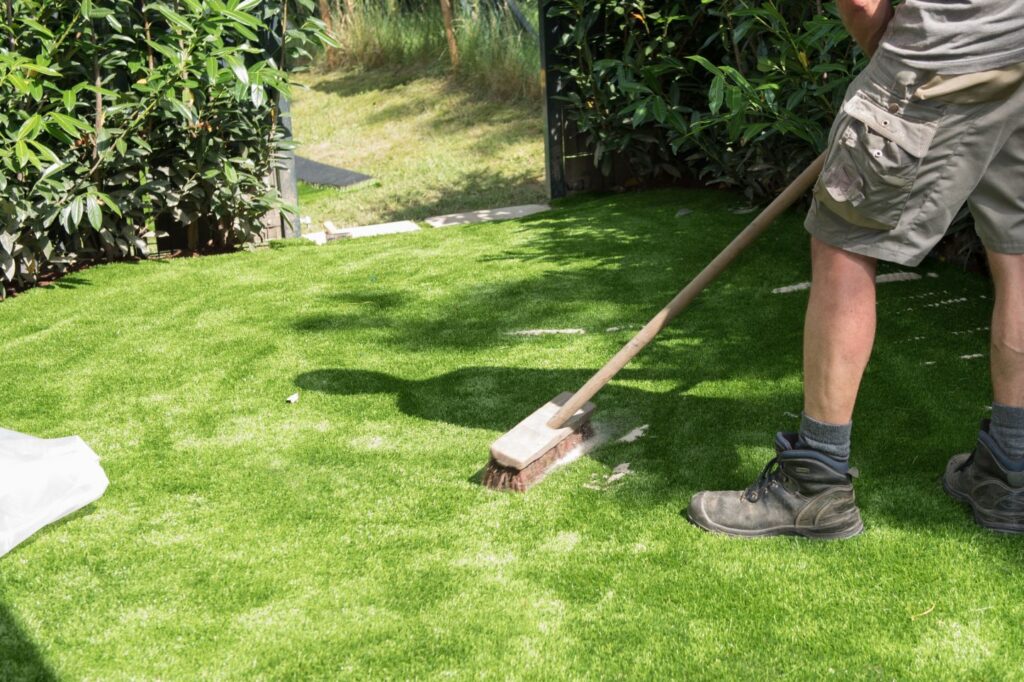
Infill is the unsung hero of every artificial turf. It’s the granular material we brush down between the blades after the turf is laid, and while you barely see it, it does an enormous amount of work. Choosing among the common artificial turf infill types affects how your lawn feels, how cool it stays, how well it drains a monsoon, and, if you have pets, how it smells. After installing turf all over the Phoenix valley, we’ve developed strong opinions about what belongs in an Arizona yard.
Why infill matters so much
Before comparing artificial turf infill types, it helps to understand what infill actually does. A lawn without proper infill goes flat, feels flimsy, and wears out fast. The right infill:
- Weighs the turf down so it lies flat and won’t ripple or lift.
- Supports the blades so they stand upright and spring back after traffic.
- Protects the backing from Arizona’s intense UV, extending the lawn’s lifespan.
- Manages heat and drainage so the surface stays usable and sheds rain.
Silica sand infill: the desert workhorse
Silica sand is the most common infill we use, and for good reason. It’s affordable, widely available, and remarkably effective in our climate.
Why sand suits Arizona lawns
- Heat performance: Sand doesn’t absorb and radiate heat the way rubber can, so the surface stays more comfortable.
- Stability: Its weight keeps turf firmly in place through wind and heavy use.
- Drainage: Water passes right through, ideal for sudden monsoon downpours.
- Value: It’s the most budget-friendly option that still performs.
Coated, odor-control sand for pets
For homes with dogs, we upgrade to an odor-control coated sand. The coating resists bacteria and helps neutralize odor from pet waste, which makes a real difference on our pet and dog runs. Rinsing keeps things fresh, and the coating stops smells from setting in during the summer heat.
Rubber infill: cushioned but heat-prone
Crumb rubber, often recycled from tires, is popular on athletic surfaces because it adds bounce and shock absorption. It’s a familiar sight under high-impact play.
Where rubber makes sense
Rubber’s cushioning is genuinely useful for sports fields and high-impact athletic zones where players need give underfoot. It provides a springy, forgiving surface for cleats and hard landings.
The problem with rubber in Arizona
Here’s our honest take: for most residential yards in the desert, we don’t recommend crumb rubber. It absorbs solar heat and radiates it back, making the lawn surface noticeably hotter on a July afternoon, the opposite of what you want. It can also carry an odor as it warms and may break down over time. For a backyard where kids and pets play, we’d rather steer you toward cooler options. For play areas that need fall protection, a foam shock pad under the turf is a better choice than loose rubber, something we build into school and playground projects.
Organic infill: the cooler, natural option
Organic infills, think cork, coconut fibers, or walnut shell blends, have grown popular with homeowners who want a natural, non-toxic material that also helps with heat.
Benefits of organic infill
- Cooler surface: Organic materials can hold a little moisture and release it, offering an evaporative cooling effect.
- Natural composition: No recycled rubber, appealing for pet owners and eco-conscious families.
- Comfort: A softer, more cushioned feel underfoot.
Things to weigh with organic infill
Organic infill costs more than sand and, because it’s lighter, it can migrate or break down faster in a low-desert climate. It works beautifully in the right setting, especially shaded lounge areas, but it isn’t always the most durable single choice for a full sun-baked yard. We’re happy to talk through whether it fits your specific space.
So which infill is right for your turf?
There’s no universal winner among artificial turf infill types, the best pick depends on your yard and how you’ll use it. Our general guidance for Arizona homeowners:
- Everyday lawns: Silica sand for value, stability, and heat performance.
- Pets: Odor-control coated sand to control odor.
- Athletic surfaces: Rubber where cushioning genuinely matters.
- Cooler, natural feel: Organic infill in shaded or lounge areas.
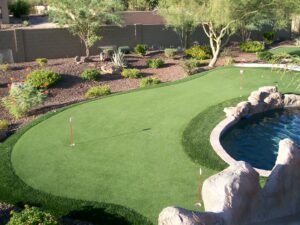
Many of our projects, from artificial turf to putting greens, use sand as the foundation, tailored with upgrades to match your priorities. Getting the infill right is one of the quiet details that separates a lawn that looks great for two years from one that thrives for fifteen.
Frequently asked questions
What is the best artificial turf infill for hot climates?
Silica sand is our top choice for Arizona because it doesn’t trap and radiate heat the way rubber does. For an even cooler surface, organic infills like cork can offer an evaporative cooling effect in shaded areas.
Which turf infill is best for dogs?
Odor-control coated sand is the best infill for pet areas. Its coating resists bacteria and helps neutralize urine odor, and it rinses clean easily, important during our hot summers when smells can set in fast.
Do I need infill in my artificial turf?
Yes. Infill weighs the turf down, keeps blades upright, protects the backing from UV, and improves drainage. Skipping it leads to a flat, flimsy lawn that wears out quickly, so we consider it an essential part of every install.
Still weighing your options? We’ll recommend the perfect infill for your yard in person. Visit our contact page for a free estimate, or call us anytime at (602) 878-6755.