Every spring, Arizona homeowners have the same conversation with themselves: how do we keep the yard looking good without pouring water into the ground all summer? For us, the answer has become clear after years of work across the Valley. Water conscious landscaping isn’t a trend, it’s the future of how we live in the desert, and synthetic lawns are at the center of it.
Why water conscious landscaping matters in Arizona
Arizona has been in a prolonged drought for over two decades. The Colorado River, which supplies a huge share of our water, is under more pressure than at any point in modern history. Cities across the Phoenix metro are planning for a future with less water, not more.
That reality has changed how thoughtful property owners approach their yards. Water conscious landscaping, designing outdoor spaces that thrive on a fraction of the water a traditional lawn needs, has gone from a nice idea to a practical necessity.
The hidden cost of a traditional lawn
A conventional grass lawn is one of the thirstiest things you can plant in the desert. To stay green through a Phoenix summer, it needs constant irrigation, and even then it struggles.
- Turfgrass can require 50–60 inches of supplemental water a year here.
- Much of that water evaporates before the roots ever use it.
- Overspray and runoff waste even more onto pavement.
- Rising water rates make it more expensive every season.
For a lot of families, the summer water bill is a genuine shock. Water conscious landscaping is, in large part, about ending that cycle.
How synthetic lawns lead the way
Synthetic turf is the single biggest move most homeowners can make toward a water-wise yard. Once it’s installed, it needs no irrigation to stay green, not in July, not ever.
Dramatic, permanent water savings
When we replace a natural lawn with turf, the water savings are immediate and permanent. A typical yard can save tens of thousands of gallons every year. For our clients, that often means:
- A noticeably lower water bill from the first month.
- No scrambling to adjust sprinklers during heat waves.
- Compliance with tightening local water restrictions.
- A yard that looks the same in August as it does in March.
Our artificial turf lawns are engineered for exactly this climate. UV-stable, heat-tolerant, and built to look natural year-round.
Beauty without the maintenance
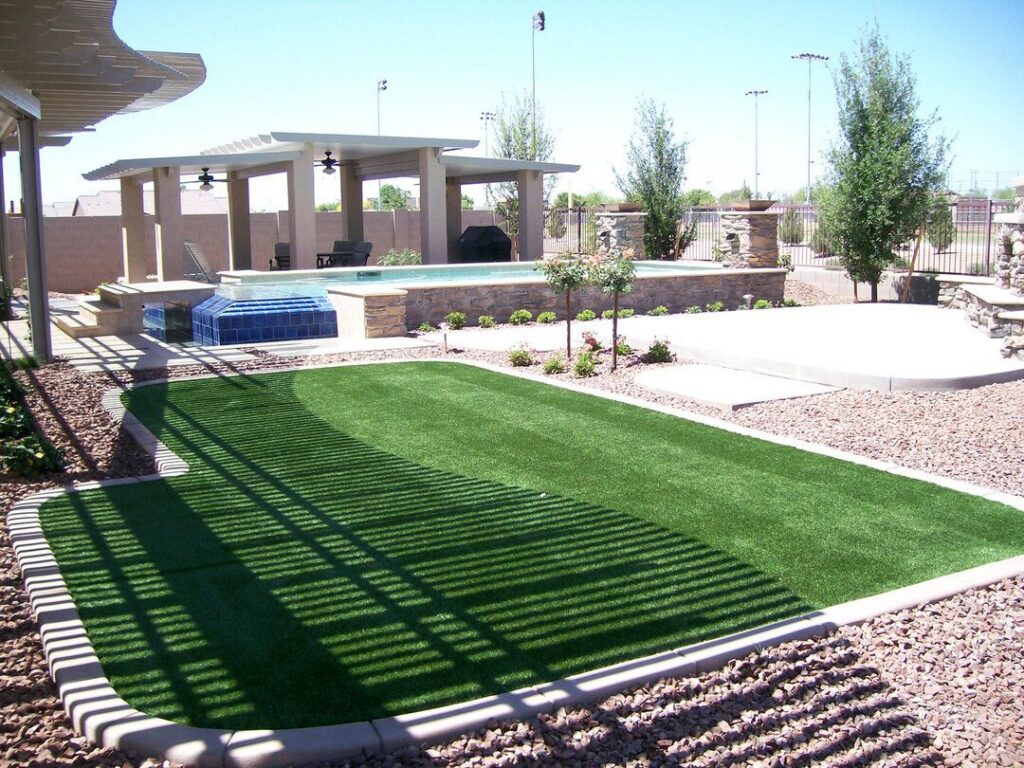
Water conscious doesn’t mean giving up a lush, green space. That’s the misconception we run into most. A well-installed synthetic lawn stays vivid and inviting without mowing, fertilizing, or reseeding.
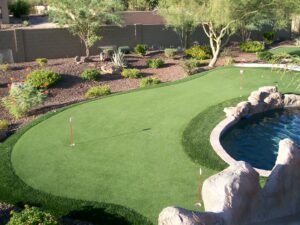
Many clients even add a backyard putting green, a genuinely water-free way to enjoy the outdoors that would be impossible to maintain as natural bentgrass in our heat.
Building a complete water-wise landscape
Turf is the anchor, but real water conscious landscaping thinks about the whole yard. We design outdoor spaces where every element works together to minimize water use while still looking beautiful.
Pairing turf with desert-friendly design
Some of our favorite projects combine synthetic lawn with low-water hardscape and native plantings:
- Rock and gravel for texture, drainage, and zero-water ground cover.
- Hardscape pavers for patios and pathways that never need watering.
- Drought-tolerant desert plants that thrive on natural rainfall.
- Efficient drip irrigation reserved only for the plants that need it.
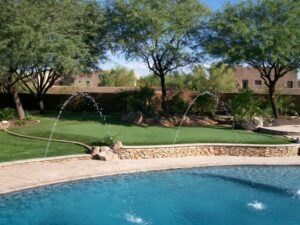
The result is a yard that feels like a lush oasis but behaves like a desert native, exactly the balance water conscious landscaping is meant to strike. You can see examples of this approach in our project gallery.
Choosing the right desert plants to pair with turf
The plantings around a synthetic lawn are what give a xeriscape its life and character, and Arizona’s native palette is remarkably generous. We lean on species that evolved for this exact climate, so they look their best on rainfall and the occasional drip cycle rather than a daily soaking:
- Red bird of paradise, Texas sage, and desert marigold for months of color that shrugs off 110° afternoons.
- Agave, golden barrel cactus, and ocotillo for bold, sculptural structure that never needs trimming.
- Palo verde and mesquite for filtered shade that cools the yard and shelters the turf from the harshest sun.
- Deer grass and other native bunchgrasses for soft movement without a lawn’s water demand.
Grouping these plants by water need, a practice called hydrozoning, lets us run a small, targeted drip system only where it’s truly needed while the turf and gravel areas take nothing at all. It’s a design approach that echoes the Sonoran Desert’s own logic, and it’s the heart of genuine water conscious landscaping in Arizona.
A smart long-term investment
Beyond the environmental case, water conscious landscaping is simply good financial planning. Water costs in Arizona are trending in one direction. A landscape that doesn’t depend on irrigation insulates you from those increases for the life of the turf, while boosting curb appeal and property value.
Is a synthetic lawn actually eco-friendly?
Water is the headline, but it is not the whole environmental case. A living desert lawn also runs on fertilizer, weed killer, and a gas mower, and in the Valley those add up fast. Fertilizer and pesticide wash into storm drains, and a mower burns fuel every week of the growing season. Turf needs none of that, so you stop putting those chemicals into the ground and that exhaust into the air.
There is an honest tradeoff worth naming. Turf is a petroleum product, and a dark turf surface runs hotter than living grass in direct sun. The first is offset across the lawn’s 15-plus years and the fact that quality turf is recyclable at the end of its life. The second you manage with lighter fibers, a heat-reducing infill, and afternoon shade. We would rather you hear that from us than find it out in July.
For a desert yard the balance still lands clearly on the side of turf: far less water, no lawn chemicals, no mower emissions, and no brown-out when the next drought restriction arrives.
Questions we hear a lot
How much water does water conscious landscaping actually save?
It varies with yard size, but replacing a natural lawn with turf commonly saves tens of thousands of gallons a year in the Phoenix area. Add desert plantings and efficient drip irrigation for the remaining greenery, and total household outdoor water use can drop dramatically, often by half or more.
Will a water conscious yard still look green and inviting?
Absolutely. That’s the whole point. Modern synthetic turf looks and feels remarkably natural, and paired with thoughtful desert plantings and hardscape, a water-wise yard can be every bit as lush and welcoming as a traditional one, without the summer water bills.
Is synthetic turf allowed under Arizona water restrictions?
Not only is it allowed, many Arizona cities actively encourage water-saving landscaping and some offer rebates for removing thirsty grass. Turf is one of the most reliable ways to stay ahead of tightening restrictions while keeping a green yard.
Ready to make your yard part of Arizona’s water-wise future? Contact us for a free estimate or call our team at (602) 878-6755, we’ll help you design a landscape that’s beautiful, low-maintenance, and built for the desert.