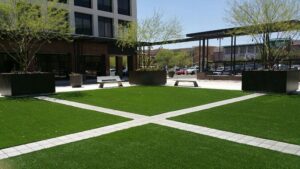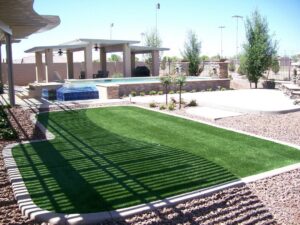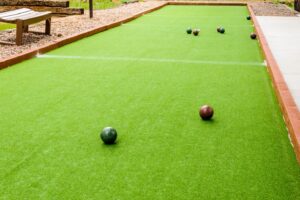
The question comes up on nearly every estimate we give here in the Valley: is artificial grass eco friendly, or is it just a plastic shortcut? It’s a fair thing to ask, especially in Arizona, where every landscaping choice carries a real environmental cost. After years of installing turf across Phoenix and greater Arizona, we’ve thought hard about this — and the honest answer is that modern synthetic grass is one of the most responsible choices a desert property owner can make.
Is artificial grass eco friendly in a desert climate?
In a wetter region, the calculation might be different. But in the Sonoran Desert, a natural lawn is fighting a losing battle against the climate every single day. Keeping grass green through a Phoenix summer takes staggering amounts of water, fertilizer, and fuel — resources that come at a steep environmental price.
When people ask whether artificial grass is eco friendly, they’re usually weighing it against that reality. And once you account for what a living lawn actually consumes here, synthetic turf looks a lot greener than its critics assume.
The water savings are enormous
Water is the headline. The average Arizona lawn drinks roughly 50–60 inches of supplemental irrigation a year to survive our heat. Replacing it with turf can save tens of thousands of gallons annually for a typical yard.
- No daily summer watering, even when temperatures top 110°.
- No runoff or overspray onto sidewalks and streets.
- Meaningful relief on your water bill during peak season.
- Less strain on the Colorado River and our groundwater supplies.
With ongoing drought and tightening water restrictions across the state, that reduction isn’t just convenient — it’s the kind of conservation Arizona genuinely needs.
No fertilizers, pesticides, or gas mowers
A conventional lawn is a chemistry project. Fertilizers and pesticides keep it alive, and those chemicals don’t stay put — they wash into storm drains and eventually our waterways. Add a gas mower running most weekends, and the carbon and pollution add up quickly.
Our artificial lawns eliminate all of it. No chemical treatments leaching into the soil, no small-engine emissions, no bags of clippings headed to the landfill. For families and pets, that means a yard with nothing toxic underfoot.
What about the plastic concern?
This is the fair counterpoint, and we won’t dodge it. Turf is a manufactured product, and manufacturing has a footprint. But a few things matter here.
Longevity offsets the material
Quality turf lasts 15–20 years or more in our experience. That’s two decades without the recurring water, chemical, and fuel inputs a natural lawn demands the entire time. Spread the manufacturing footprint across that lifespan and the math shifts firmly in turf’s favor.
Recyclability is improving
The materials in modern turf — polyethylene, polypropylene, and nylon — are recyclable, and reclamation programs for end-of-life turf continue to grow. The industry is moving steadily toward a genuine closed loop.
Heat is a real factor we design around
Turf does get warm in direct Phoenix sun, and we’re upfront about that. But it’s manageable:
- Newer infills and backing systems are engineered to shed heat faster.
- Strategic shade from trees, pergolas, or awnings keeps surfaces comfortable.
- A quick rinse cools turf down in minutes on the hottest days.
- Pairing turf with rock and gravel or hardscape pavers creates a balanced, low-heat landscape.
The desert’s hidden water math
It helps to put Arizona’s situation in perspective, because the numbers are what make this decision so clear-cut here. The Colorado River supplies a large share of the water flowing to Phoenix, Scottsdale, Mesa, and Tucson, and it has been running well below capacity through a megadrought stretching back more than two decades. Lake Mead and Lake Powell have repeatedly hit record lows, and the state has already absorbed cuts to its river allocation under federal shortage declarations. Every gallon a natural lawn evaporates in July is a gallon drawn from that shrinking system.
So when someone asks us is artificial grass eco friendly, we point to what a single suburban lawn saves once it stops drinking through the summer. Turf is one of the few landscaping changes that pays an environmental dividend the moment it’s installed and keeps paying it every hot month for the life of the product:
- Programs like the Arizona Municipal Water Users Association’s grass-removal and rebate efforts exist precisely because turf reduction moves the needle on regional demand.
- Removing thirsty grass also cuts the diesel and gas burned by weekly maintenance crews criss-crossing the Valley.
- Less irrigation means less fertilizer and herbicide runoff reaching the Salt and Gila River watersheds.
In a place where water policy is front-page news year after year, choosing a landscape that simply doesn’t need irrigation is one of the most tangible conservation steps a homeowner can take.
The bigger environmental picture
Being eco friendly isn’t only about one product in isolation — it’s about the whole yard and how it fits the desert. Turf lets us design landscapes that work with Arizona’s climate instead of against it.
We often combine synthetic grass with desert-adapted plants, permeable surfaces, and efficient drainage so rainwater soaks in rather than running off. The result is a yard that stays green and usable year-round while sipping a fraction of the resources a traditional lawn would.
For homeowners with pets, dedicated pet and dog runs add another layer of sustainability — a durable, cleanable surface that never turns to mud or dead patches, so there’s no re-sodding or re-seeding year after year.
Frequently asked questions
Is artificial grass eco friendly compared to a natural lawn in Arizona?
In our desert climate, yes. A natural lawn here requires constant irrigation, fertilizer, pesticides, and mowing just to survive the heat. Turf eliminates nearly all of those ongoing inputs, and the water savings alone — often tens of thousands of gallons a year — make it the more sustainable choice for most Phoenix-area yards.
Can artificial grass be recycled at the end of its life?
Yes. The polyethylene and polypropylene in modern turf are recyclable, and dedicated turf-reclamation programs are expanding nationwide. Because quality turf lasts 15 to 20 years, that end-of-life moment is also far less frequent than the constant resource use a living lawn demands.
Does turf get too hot to be worthwhile in Phoenix?
It warms in direct sun, but it’s very manageable with shade, heat-reducing infills, and an occasional rinse. Most of our clients find the trade-off well worth it once they see the water savings and year-round green.
Ready to see whether artificial grass is the right eco-friendly fit for your property? Contact us for a free estimate or call our team at (602) 884-8760 — we’d love to help you build a greener, water-wise Arizona landscape.