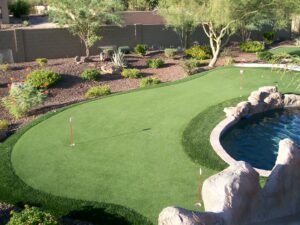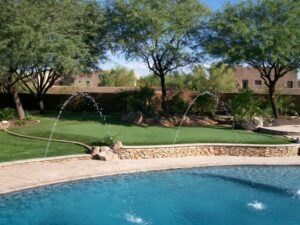
If you own a home in the Valley, the lawn debate isn’t abstract, it’s something you pay for every month. A green lawn still says “welcome home,” but keeping natural grass alive through a Phoenix summer is a serious commitment of water, time, and money. When you weigh artificial grass vs natural grass honestly, the desert climate changes the whole equation. Here’s the straight truth on cost, maintenance, and sustainability so you can decide what’s right for your yard.
Cost: initial investment vs long-term expense
Let’s be upfront: installing synthetic turf costs more on day one than seeding or laying sod. The materials, base preparation, and labor are a real investment. But comparing only the upfront number misses the point, the true cost of a lawn is what it demands over years of ownership.
A natural lawn in Arizona keeps charging you for:
- Frequent irrigation, the single biggest ongoing cost in our climate
- Fertilizer, weed control, and pest treatments
- Mowing, edging, and aerating, whether DIY or hired out
- Overseeding every fall to survive the summer’s toll
Synthetic turf needs almost none of that. Once it’s in, the recurring bills largely disappear, and the savings on water and lawn care steadily close the gap on that initial investment. Explore your options with our artificial turf installations.
Maintenance: hours of effort vs a quick rinse
This is where the two options feel most different in daily life. Natural grass wants weekly attention, mowing, trimming, watering on a schedule, and patching bare spots from heat, pets, or foot traffic. Skip a week in July and it shows.
Artificial grass doesn’t grow, so there’s no mowing, no trimming, and no reseeding. There are no weeds pushing up and no pests to treat. Upkeep is as simple as a periodic rinse, a quick brush of high-use areas, and clearing leaves or debris. For busy households, that difference is measured in dozens of reclaimed hours every year.
A cleaner option for pet owners
Dog owners feel the contrast most. Natural grass turns to mud and yellow spots fast, while turf stays clean, waste is easy to pick up and rinse away, with no digging or dead patches. It’s why so many Arizona families choose dedicated pet and dog runs alongside their main lawn.
Sustainability: the honest environmental picture
At first glance, natural grass looks like the greener choice, living plants take in carbon dioxide and release oxygen. That’s true. But in an arid climate, the resources required to keep that grass alive tell a more complicated story.
Natural lawns need heavy, frequent irrigation, which puts real strain on Arizona’s limited water supply. The fertilizers and pesticides used to keep grass healthy can also run off into local waterways. Artificial turf eliminates irrigation entirely and needs no chemicals at all, a meaningful benefit where water conservation isn’t a trend but a necessity. Many modern turf products are also made with recyclable materials and built to last, so replacements are rare.
The most sustainable desert yards often blend materials thoughtfully, turf where you want softness underfoot, and rock and gravel or desert plantings elsewhere to reduce water use even further.
Durability: which lawn survives an Arizona summer?
Natural grass struggles under intense sun, heavy foot traffic, and monsoon extremes. Bare patches and browning are a constant fight here. Quality synthetic turf is engineered to resist fading under harsh UV, stand up to play and pets, and drain quickly after a downpour instead of turning to mud. It holds its shape, texture, and color with minimal effort &mdash with a long lifespan.
A green lawn year-round
Perhaps the biggest advantage of artificial grass vs natural grass in Arizona is consistency. A living lawn browns in the heat and thins in winter without constant intervention. Turf stays green and inviting through every season, ready for a backyard barbecue in June or a quiet morning in January, without you lifting a finger to keep it that way. See real Valley yards in our gallery.
Making the right choice for your home
Natural grass still has its place, and we’ll tell you honestly if it suits your goals. But for most Phoenix-area homeowners, the ongoing water and maintenance demands make synthetic turf the more practical, cost-effective, and eco-conscious choice over the long run. The right answer depends on your yard, your budget, and how you actually want to spend your weekends.
A few things people ask
Is artificial grass better than natural grass in Arizona?
For most Valley homes, yes, primarily because of water. Our climate makes natural lawns expensive and demanding to maintain, while turf stays green year-round with minimal upkeep. That said, the best choice depends on your specific yard and how you plan to use it.
Does artificial grass look fake compared to real grass?
Today’s turf is a world away from the flat “fake grass” of decades past. Quality products use varied blade shapes, heights, and multi-tone coloring to look remarkably natural. Professional installation with a proper base and clean seams is what really sells the realistic look.
Which option is more environmentally friendly in the desert?
In an arid climate, artificial turf usually wins on sustainability because it eliminates irrigation and lawn chemicals. Natural grass produces oxygen but consumes large amounts of a scarce resource, water, to survive our summers.
Still weighing your options? Let us walk your yard and give you the real numbers for both paths. Request a free estimate for an honest, itemized quote, or call our Phoenix team at (602) 878-6755. We’re a local, family-owned company, we’ll help you choose what’s genuinely best for your home.