It’s one of the most common questions we hear from Phoenix homeowners considering the switch from natural grass: does artificial grass wear out? It’s a fair thing to ask before investing in your yard. The honest answer is yes, artificial grass does eventually wear out, but a quality product, professionally installed, can look and perform beautifully for many years, even under Arizona’s relentless sun. Let’s break down what that really means for your lawn.
Fading is part of how turf ages, too. See whether artificial grass fades in the Arizona sun.
Does artificial grass wear out over time?
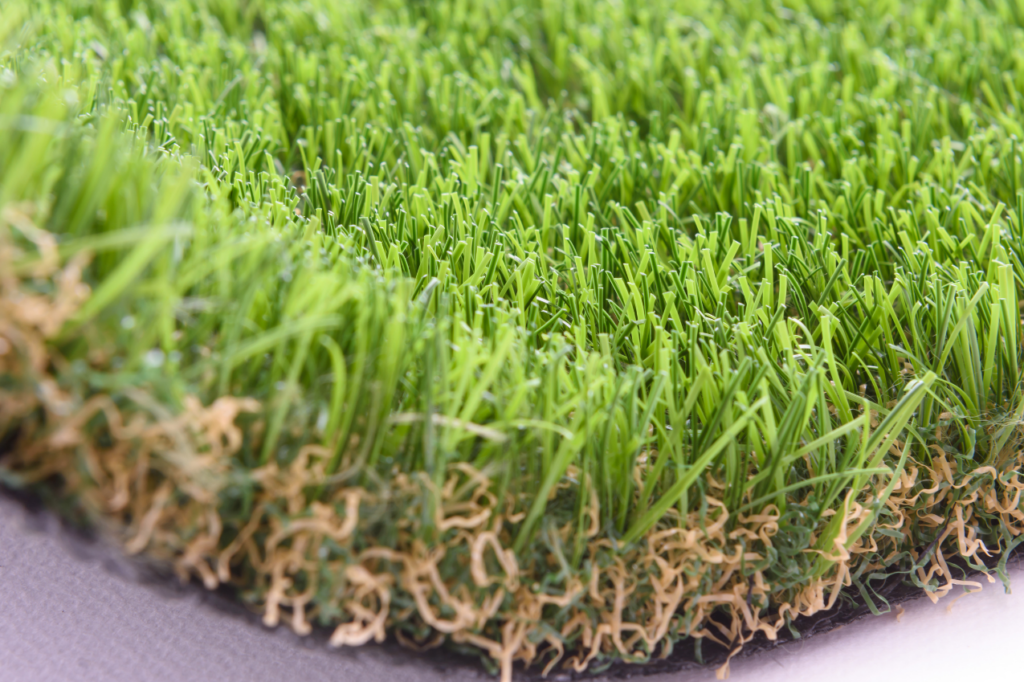
Like any outdoor surface, synthetic turf ages. But it doesn’t “wear out” the way natural grass dies off in patches or the way cheap products degrade within a few seasons. Premium turf is engineered with UV-stabilized fibers and durable backing designed to withstand years of foot traffic, heat, and weather. What you’ll typically see near the end of its life is gradual matting, some color fading, and thinning in the busiest spots, not a sudden failure.
For most Arizona households, a well-installed artificial turf lawn stays lush and functional far longer than any natural lawn could survive in our desert climate, and with a fraction of the water and upkeep.
How long does artificial grass last in Arizona?
Lifespan depends on the product and how the turf is used, but here are realistic expectations for our region:
- Standard residential turf: a 15-year product warranty, longer with proper care.
- High-traffic areas: 8–12 years before visible wear in the busiest paths.
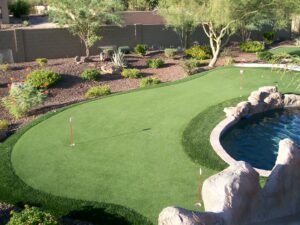
- Putting greens: often 15+ years thanks to specialized short-pile construction.
- Sports and play surfaces: 8–15 years depending on intensity of use.
Arizona’s intense UV exposure is the single biggest factor, which is why choosing turf with strong UV protection matters so much here compared to milder climates.
What causes artificial grass to wear out?
Understanding what drives wear helps you get the longest life from your investment. A few key factors stand out.
Sun and UV exposure
Our sun is brutal on outdoor materials. Quality turf resists fading with UV-stabilized fibers, but budget products without proper protection can fade and grow brittle within just a few Arizona summers. This is one area where cutting costs upfront rarely pays off.
Foot traffic and use
The more a surface is used, the faster the fibers flatten. A quiet front yard ages slowly, while a backyard where kids and dogs play daily will show wear sooner in the high-traffic lanes. Purpose-built products help, our pet and dog runs and sports fields use heavier-duty turf made for constant activity.
Installation quality
This is the factor homeowners underestimate most. Turf laid over a poorly compacted base develops ripples, dips, and drainage issues that dramatically shorten its usable life. A proper aggregate base, correct infill, and secure seams are what let premium turf reach its full lifespan.
Maintenance habits
Neglect accelerates wear. Debris left to sit, matted fibers that are never brushed, and harsh cleaners all take a toll. A little routine care keeps the surface performing for years longer.
How to make your artificial grass last longer
The good news is that extending your turf’s lifespan is easy. A few simple habits make a real difference:
- Brush high-traffic areas regularly to keep fibers standing upright.
- Rinse off dust and debris to prevent buildup in the fibers and infill.
- Rotate heavy furniture so blades don’t stay compressed in one spot.
- Keep heat sources on hard surfaces to protect fibers from melting.
- Address spills and pet waste promptly so nothing bakes into the surface.
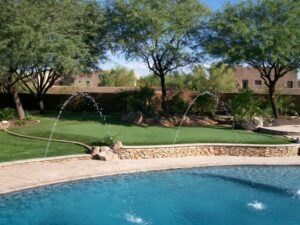
Choosing a specialty product for its intended use also helps. A short-pile putting green, for example, is built to stay smooth and true for years of play. Browse finished installations in our gallery to see how well quality turf holds up over time.
Is artificial grass worth it long-term in Arizona?
Absolutely. When you weigh years of a green, water-wise lawn against the constant cost of water, mowing, reseeding, and fertilizing natural grass in the desert, not to mention the summers when real grass simply struggles, turf pays for itself many times over. It wears out eventually, but slowly and predictably, and it earns its keep every single year in between.
Questions homeowners ask
How do I know when my artificial grass needs replacing?
Watch for widespread matting that won’t brush back up, significant fading, thinning or bald spots in high-traffic areas, and backing that’s become brittle or separated at the seams. If the surface no longer looks or feels good underfoot despite regular care, it may be time to replace it.
Does artificial grass fade in the Arizona sun?
Quality UV-stabilized turf resists fading and holds its color for many years. Lower-grade products without proper UV protection can fade noticeably in just a few summers, which is why we recommend turf specifically rated for our intense desert sun.
Can worn artificial grass be repaired instead of replaced?
Usually, and a repair costs a fraction of a full replacement. A flattened traffic lane often comes back with cross-brushing and fresh infill, and a lifting seam or a small burn is a spot fix rather than a redo. Full replacement only earns its place once the backing itself has broken down across most of the lawn. When something specific is damaged, our guide on repairing artificial turf walks through each fix.
Thinking about turf that will last for years in Arizona’s climate? Request your free estimate or call our family-owned team at (602) 878-6755, we’ll help you choose a lawn built to go the distance.