Artificial turf is remarkably forgiving — it won’t stain the way carpet does, and its non-porous fibers resist most spills. But live on it long enough, especially with kids, pets, and backyard barbecues, and something is bound to land on it. The good news is that learning how to clean stains on artificial turf is simple when you act quickly and use the right approach. As an Arizona turf company, we’ve seen it all, from spilled margaritas to sunscreen to the occasional dropped popsicle, and almost every mess comes out with the right technique.
Why stains behave differently on artificial turf
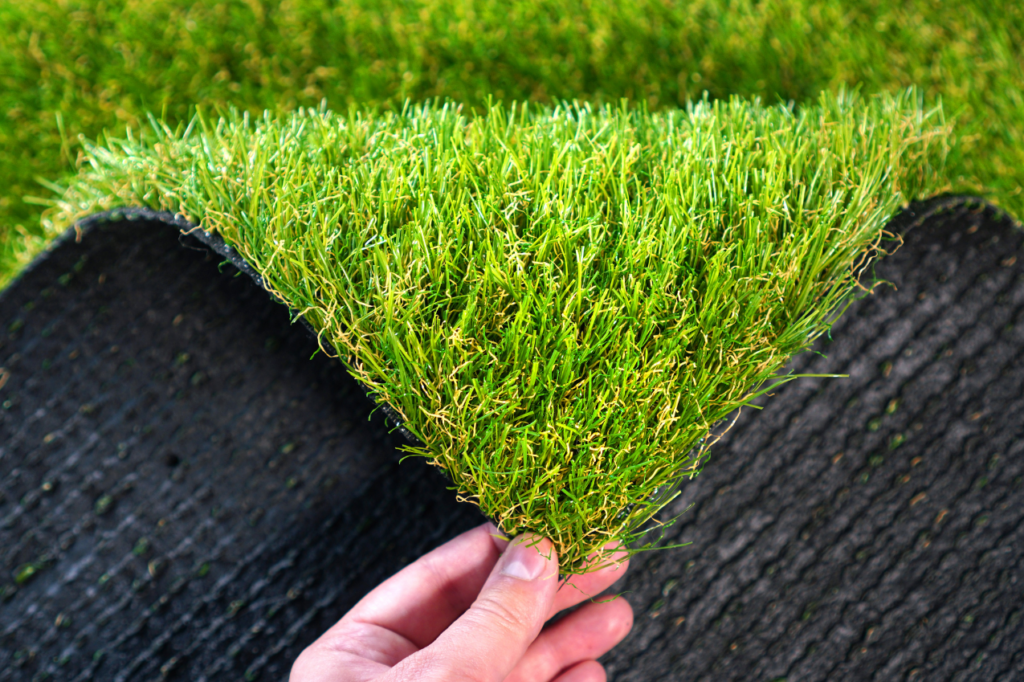
Quality synthetic grass is designed to shed liquids rather than absorb them. Spills tend to sit on the surface or drain straight through the permeable backing instead of soaking into the fibers. That’s a big advantage in our climate, where a well-installed artificial lawn drains fast and dries even faster in the desert sun. The key to keeping it pristine is treating messes before they dry and bake in the Arizona heat.
How to clean stains on artificial turf: the basics
Before reaching for any cleaner, follow this simple first-response routine. It resolves the majority of everyday spills.
- Act fast. The sooner you address a spill, the easier it lifts. This matters even more here, where heat dries liquids quickly.
- Blot, don’t rub. Use a clean cloth or paper towel to absorb liquid. Rubbing spreads the mess deeper into the fibers.
- Rinse with water. A garden hose flushes most residue down through the backing.
- Use a mild solution. If water alone isn’t enough, mix a little dish soap or white vinegar with warm water.
Your basic stain-fighting kit
Keep these on hand so you’re ready for anything:
- A garden hose with a spray nozzle
- Mild liquid dish soap
- White vinegar
- A soft-bristle brush
- Clean rags or paper towels
- An enzyme cleaner for pet messes
How to clean specific stains on artificial turf
Some spills need a slightly tailored approach. Here’s how we handle the most common ones.
Food and drink spills
Coffee, soda, wine, and juice all respond well to a mix of one teaspoon of dish soap in a quart of warm water. Apply it, blot gently, then rinse. For sticky residue like ice cream or candy, let warm soapy water soften it first, then brush lightly.
Grease, oil, and sunscreen
These are the trickiest because they’re oil-based. Dab a small amount of grease-cutting dish soap directly on the spot, work it in with a soft brush, and rinse thoroughly. Sunscreen — a common one around Arizona pools — usually lifts with the same method. Never use petroleum-based solvents, which can damage the fibers.
Pet stains and odors
Rinse the area well, then apply an enzyme-based cleaner made for synthetic grass to break down odor-causing compounds. Turf built for animals drains and dries fast, which is why our pet and dog runs hold up beautifully to daily use. See finished examples in our gallery.
Chewing gum, wax, and sticky messes
Harden them first. Press a bag of ice on the spot until the gum or wax turns brittle, then gently scrape it away with a plastic edge. Don’t pull at it while it’s soft, or you risk fraying the blades.
Stubborn or dried-on stains
For a spill that’s already dried, soak the area with warm soapy water for several minutes to loosen it, then brush and rinse. A vinegar-and-water solution is great for mineral or hard-water marks, which show up often on Arizona turf.
Arizona-specific messes we get asked about most
Our desert lifestyle creates a few stains you won’t find in a maintenance guide written for cooler climates. Here’s how to clean these stains on artificial turf without harming the fibers:
- Pool chemicals and salt-cell splash-out. Chlorinated or saltwater splash from a backyard pool rarely bleaches quality UV-stabilized turf, but salt can leave a crusty residue as it dries. Flush the area with plain water so nothing concentrates in the infill.
- Hard-water and sprinkler overspray rings. The Valley’s mineral-heavy water leaves whitish halos where drops evaporate. Equal parts white vinegar and water dissolves them; adjust nearby drip or spray heads so they’re not misting the turf.
- Fire pit ash and citrus drop. Cooled ash blows onto turf on breezy evenings, and stains from fallen citrus, olives, or palo verde blossoms can tint light-colored infill. Blow off the debris first, then rinse before anything sets.
- Red clay and caliche dust. Our native soil tracks in easily and its iron content can leave a rusty tint. Rinse promptly — once it dries and bakes, it takes more scrubbing to lift.
The pattern is always the same: clear the solids, rinse before the heat sets the stain, and reach for a mild solution only if plain water isn’t enough.
What not to use on turf stains
The wrong product can do more harm than the stain itself. Avoid these entirely:
- Bleach and ammonia — they can discolor fibers permanently.
- Harsh solvents or acids — they degrade the backing and infill.
- Metal tools or wire brushes — they snag and tear blades.
- High-pressure washers — strong streams displace infill and fray fibers.
Frequently asked questions
Will spills leave a permanent stain on artificial turf?
Rarely. Quality synthetic fibers are stain-resistant and non-absorbent, so most spills rinse right out — especially if you treat them before they dry. Truly permanent staining is uncommon and usually only happens with harsh chemicals or paint that’s left to cure.
Can I use bleach to clean stains on artificial turf?
No. Bleach and other harsh chemicals can strip color from the fibers and weaken the backing. Stick with mild dish soap, white vinegar, or an enzyme cleaner designed for turf, and always rinse well afterward.
How do I remove hard-water marks from my turf?
Arizona’s hard water can leave whitish mineral deposits. A solution of equal parts white vinegar and water dissolves them nicely. Spray it on, let it sit for a few minutes, gently brush, and rinse thoroughly with clean water.
Life happens, and your lawn can handle it. If you’d like turf that shrugs off spills, pets, and Arizona weather with ease, request your free estimate or call our team at (602) 884-8760 — we’re here to help you love your yard.